China is a land shaped by history and ambition, where ancient landmarks and futuristic skylines coexist in constant contrast. From the Great Wall stretching across mountain ridges to the gardens, rivers, and buzzing street life of its megacities, every journey here challenges expectations and rewards curiosity.
For travellers drawn to the unexpected, few destinations are as compelling. But before walking through imperial palaces, admiring Xi’an’s Terracotta Army, cruising the Yangtze, or exploring Shanghai’s Bund, one essential step comes first: securing the correct entry authorisation.
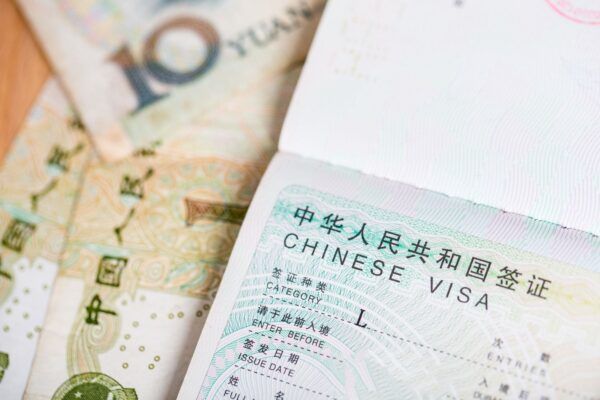
A Chinese visa is an official permit that allows foreign nationals to enter, exit, or transit through Chinese territory for a specific purpose. At first glance, the process may seem complex. Forms are detailed, rules appear strict, and terminology feels unfamiliar. This reaction is common. The good news is that the system is structured, consistent, and manageable once you understand how it works.
This guide breaks down the entire application process, explains current visa-free arrangements, and highlights key exceptions such as transit policies. With the right information, preparation becomes far easier—and confidence follows.
The Tourist (L) Visa is the most common entry permit for travellers visiting China for leisure. It covers tourism, short cultural trips, and visits to friends or relatives. Stays are typically granted for 30, 60, or 90 days, depending on the application and nationality. This visa does not allow employment or long-term study.
Most travellers from the UK, United States, Canada, Europe, and many Asian countries still need to apply for this authorisation. However, China currently offers a 30-day visa-free stay for citizens of selected countries.
At the time of writing, eligible nationalities include France, Germany, Italy, Spain, the Netherlands, Switzerland, Ireland, Hungary, Austria, Belgium, Luxembourg, Malaysia, and others. Travellers must hold a standard passport, stay no longer than 30 days, and travel for tourism, family visits, or business purposes.
This policy is officially confirmed until 31 December 2025, with Chinese authorities indicating likely extensions beyond that date. As eligibility lists can change, travellers should always verify the latest updates through official government or embassy sources.
If your nationality qualifies and your trip is within the allowed duration, no application is required. In all other cases, the Tourist (L) Visa remains mandatory. Your passport must be valid for at least six months beyond your intended departure date.
The 30-Day Visa-Free Policy: Who Is Eligible?
China’s unilateral visa-free policy allows citizens of specific countries to enter without applying in advance, provided their stay does not exceed 30 days. This arrangement is designed for short visits only and does not cover work, study, or extended travel.
Visitors must enter with an ordinary passport and respect the permitted purposes of travel. Extensions are rarely granted, and overstaying can result in penalties.
Travellers whose nationality is not covered, or who plan to remain longer than 30 days, must apply for a Tourist (L) Visa before departure. Many issues arise simply because this distinction is overlooked, so it’s essential to confirm your status well in advance.
Mandatory Documents: What You’ll Need to Apply
Applying for a Chinese entry permit requires careful preparation. Missing or incorrect documents are the most common cause of delays. You will typically need:
A valid passport with at least six months of remaining validity and two blank pages.
A completed online application form with information matching your documents.
Two passport-style photographs that meet official specifications.
Proof of travel plans, such as return flights and accommodation bookings.
An invitation letter or financial proof, where required.
Proof of Itinerary: Flights, Hotels, and Group Travel
Chinese authorities want reassurance that visitors intend to leave after their stay. A confirmed return flight and hotel booking usually satisfy this requirement.
If you are travelling as part of an organised group, the process is simpler. In many cases, you do not need to submit individual flight or hotel confirmations. Instead, the tour operator provides an official invitation or confirmation letter that replaces these documents.
This is one of the key advantages of organised travel, especially for first-time applicants navigating the system.
The Application Process: Step by Step
Obtaining a Tourist (L) Visa follows a clear procedure:
Complete the online application form. It is detailed and asks about your employment, travel history, and itinerary. Accuracy is essential.
Book an appointment at your nearest visa application centre. Walk-ins are rarely accepted.
Attend the appointment in person to submit documents, pay the required fees, and provide biometric data if requested.
Delays most often result from incomplete information or inconsistencies in employment or travel history, so reviewing your application carefully is crucial.
Biometrics and Fingerprints: What to Expect
Most applicants are required to provide fingerprints during their appointment. This applies to nearly all adults, with common exemptions for children under 14 and adults over 70.
Fingerprints, documents, and payment are handled during the same visit. While this step can feel intimidating, it is standard procedure. Once completed, your application enters processing, and your passport is returned once a decision is made.
Costs, Fees, and Processing Times
Visa costs vary by nationality and number of permitted entries. Fees are subject to change and are non-refundable once paid.
Applicants typically pay:
A visa fee set by the Chinese embassy or consulate.
A separate service fee charged by the visa application centre.
Some nationalities may be subject to reciprocity fees, which increase the total cost. Payment methods and exact amounts should always be confirmed with your local application centre.
Standard processing times range from four to ten working days. Express options may be available for an additional fee, but approval is not guaranteed and depends on the circumstances. Applying at least one month before departure is strongly recommended, especially during peak travel periods.
Visa-Free Transit and Special Entry Rules
In some specific cases, travellers may enter China without applying for a visa in advance. These options apply only to transit situations and do not replace the standard tourist visa system. Conditions are strict, and eligibility depends on itinerary, ports of entry, and length of stay.
China has extended its visa-free transit policy for eligible travellers. Under this framework, visitors can remain in designated cities and regions for up to 30 days without a visa, with the policy currently confirmed until 31 December 2026. This arrangement applies exclusively to transit travel and should not be confused with visa-free tourism or the Tourist (L) Visa.
The 144-Hour Transit Policy: Key Rules for Layover
China’s well-known 144-hour visa-free transit policy allows travellers to stay in certain cities for a limited period while en route to a third country. It is important to note that this is not a tourist visa and cannot be used for open-ended travel.
To qualify, travellers must:
Hold a confirmed onward ticket to a third country (for example, London–Shanghai–Bangkok).
Enter and exit through designated ports.
Remain within the approved transit region.
Respect the maximum permitted stay.
Any deviation from the declared onward itinerary can result in penalties or denied entry. For travellers considering this option, careful planning is essential, including awareness of seasonal factors when choosing the best time to visit China to avoid disruptions.
Essential Post-Entry Requirements: Registration and Digital Life
Having your Chinese visa approved is a major step, but a few important formalities remain once you arrive in the country. China enforces specific post-entry rules that are straightforward to follow, yet essential to respect in order to avoid unnecessary complications during your stay.
Being aware of local registration requirements and preparing for China’s digital ecosystem will make your experience far smoother from day one.
The 24-Hour Rule: Registering with the Public Security Bureau
If you stay in a licensed hotel, registration is automatic. The hotel will submit your details directly to the local Public Security Bureau (PSB), and no action is required on your part.
However, if you stay in unlicensed accommodation — such as an Airbnb, private apartment, guesthouse, or with friends or family — registration becomes your responsibility. Within 24 hours of arrival, you must visit the local police station together with the property owner or host.
Failure to register can result in fines and may cause issues when leaving the country. In more serious cases, it can also affect future entry into China. Planning ahead and completing this step promptly ensures a stress-free stay.
Navigating the Digital World in China
China operates within a digital ecosystem that differs significantly from most Western countries. Many commonly used platforms — including Google, WhatsApp, Facebook, Instagram, and similar services — are not accessible without preparation.
Travellers are strongly advised to install a reliable VPN before entering China, as app stores and downloads may be limited once inside the country. Ensuring access to essential apps in advance will help you stay connected and organised.
Mobile payments dominate everyday life. WeChat Pay and Alipay are widely accepted across the country, while cash usage is increasingly rare. Foreign credit cards may work in some places, but acceptance is inconsistent. Setting up digital payments in advance and planning routes and activities ahead of time can make a significant difference. Exploring the best places to visit in China beforehand also helps streamline logistics during your trip.
Ready to Unlock Your Authentic China Adventure?
Applying for a Chinese travel authorization requires accuracy, patience, and preparation — but the reward is worth it. China offers scale, contrast, and depth unlike anywhere else, from imperial capitals to futuristic skylines.
For travellers who prefer a smoother experience, small-group tours remove much of the logistical burden. They simplify itineraries, accommodation, transport, and even visa-related paperwork, allowing you to focus on the journey itself.