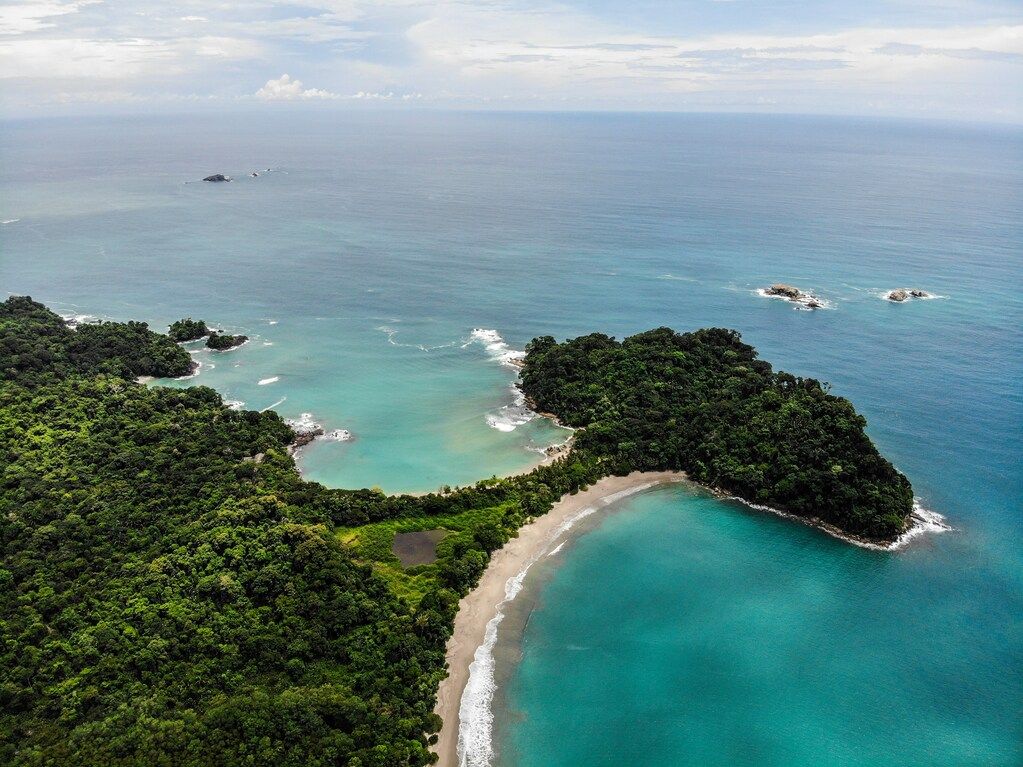
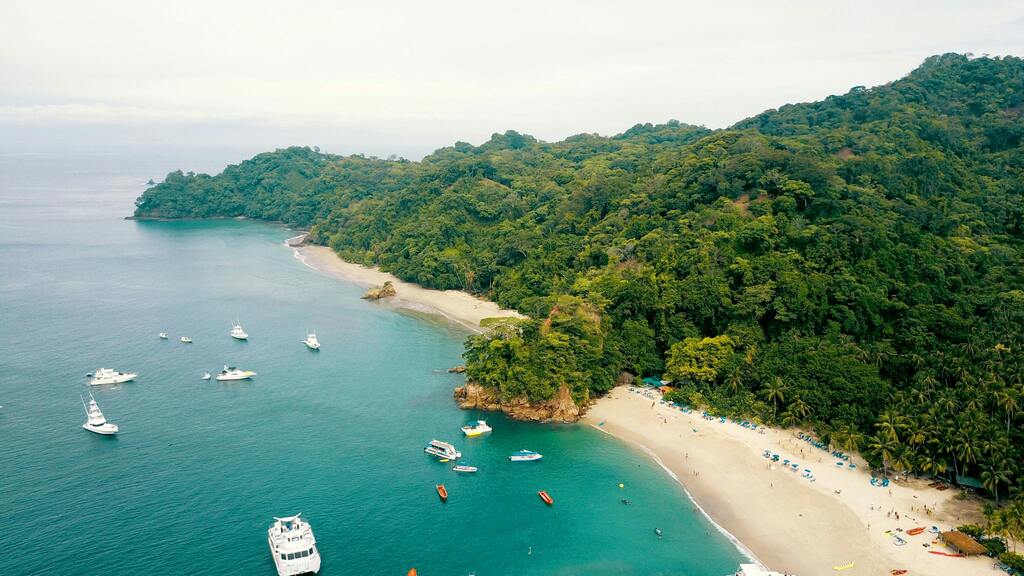
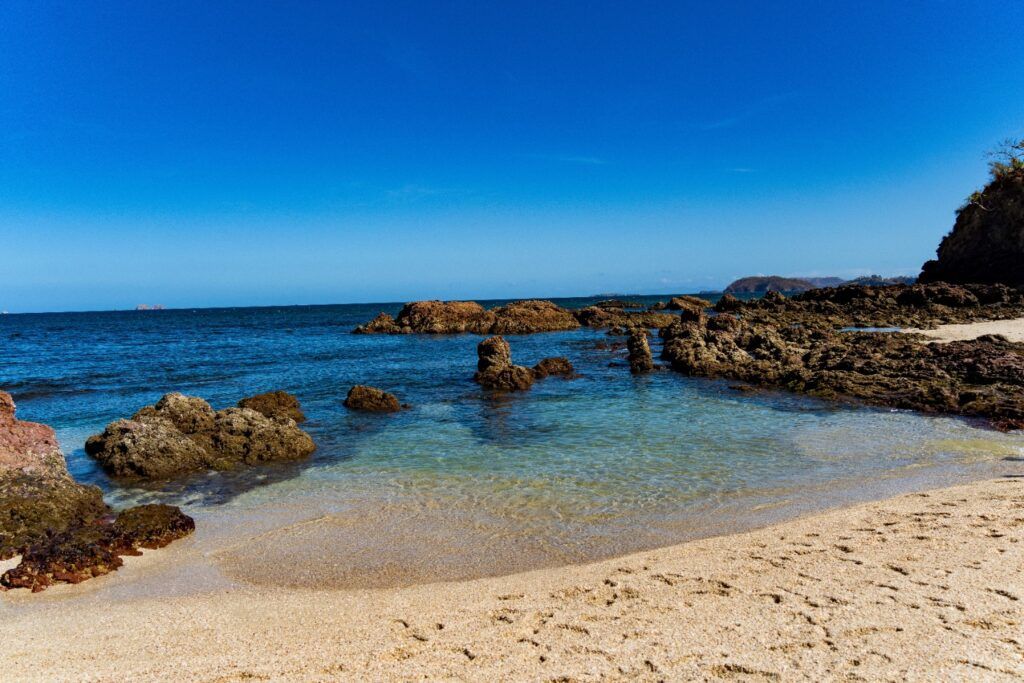
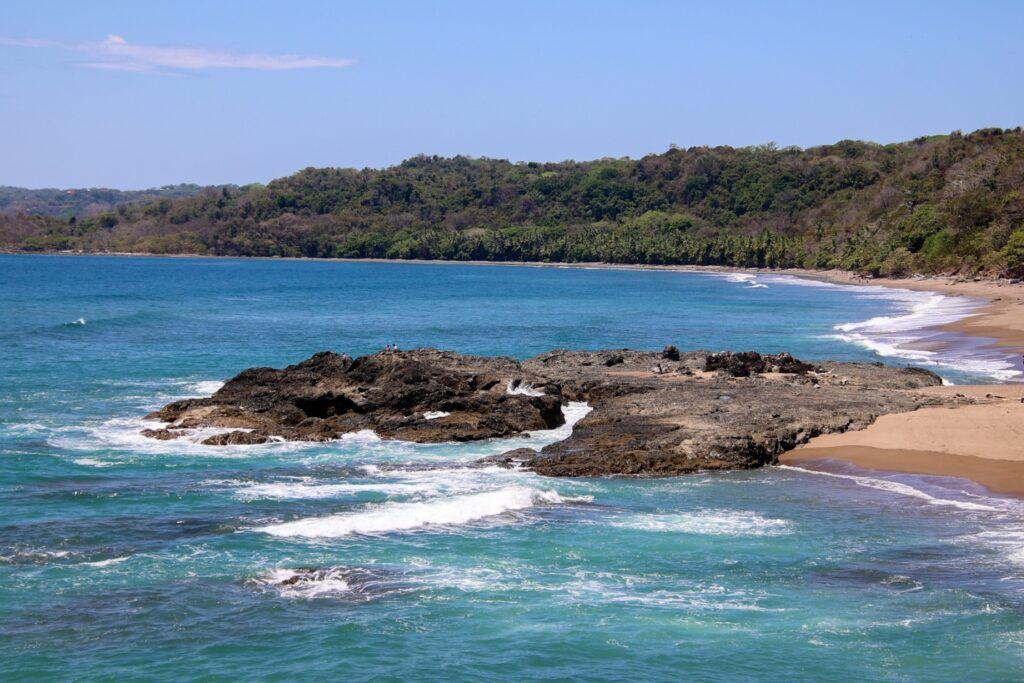
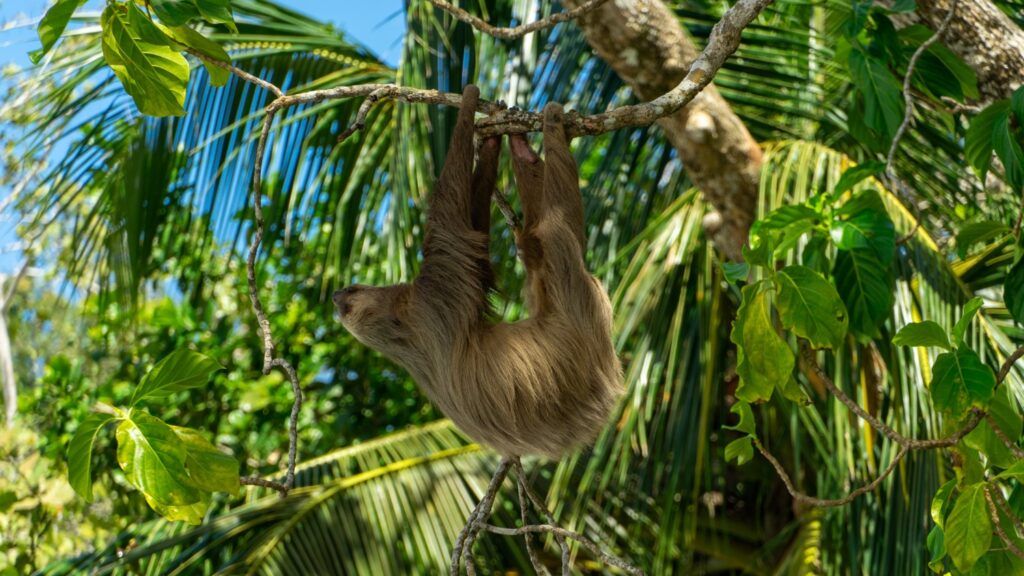
In Costa Rica, the jungle doesn’t politely stop at the edge of the sand — it spills straight into the sea. Palm trees lean toward the water, howler monkeys echo through the canopy, and scarlet macaws cut across the sky as waves break below. Few coastlines feel this alive. What makes them special is the contrast: raw, untamed nature paired with a relaxed, deeply rooted way of life that invites you to slow down and stay awhile.
What truly sets the country apart is its geography. Within a relatively small stretch of land, Costa Rica offers two completely different coasts. The Pacific side delivers dramatic sunsets, powerful surf, and long beaches of golden or volcanic sand. On the Caribbean, the pace softens: calmer waters, deeper greens, and a cultural rhythm shaped by reggae and Afro-Caribbean traditions. Many beaches sit within protected parks, meaning your day by the ocean may be shared with sloths, monkeys, and tropical birds — not just other travellers.
The Pacific Coast: Surf Culture, Sunsets, and Easy Access
When most people imagine Costa Rican shores, they’re thinking of the Pacific. This coastline stretches from the wild Osa Peninsula in the south to the dry plains of Guanacaste in the north. Conditions here are generally drier, especially in the northwest, with long sunny days that make it a global hotspot for surfing.
The landscapes vary dramatically. Some beaches are wide and sandy, others rugged and remote, edged with black volcanic sand. The Pacific side is also the most developed, with surf towns, restaurants, and accommodation options that make travel relatively straightforward — particularly for first-time visitors. Even so, nature remains dominant, with national parks extending right to the ocean.
Guanacaste Beaches: Sunshine, Surf, and Comfort
Guanacaste, in the northwest, is all about sunny weather and accessibility. This is where beach time meets convenience. Playa Tamarindo is the most famous stop: beginner-friendly waves, lively nightlife, and an energetic social scene that blends surf culture with sunset cocktails.
Just down the coast, Playa Conchal offers a completely different experience. Instead of sand, the shoreline is formed by millions of crushed shells that shimmer pale gold in the sun. The water is usually calm and crystal-clear, making it one of the best swimming beaches in the country.
Know before you go: arrive early. Mornings at Playa Conchal are quiet, the sea is gentler, and the atmosphere far more peaceful before day-trippers arrive.
Nicoya Peninsula: Bohemian Spirit and Slower Days
Further south, the Nicoya Peninsula trades convenience for character. Dusty roads, barefoot restaurants, yoga studios, and sunset rituals define the vibe. It’s a favourite among surfers, creatives, and travellers drawn to a slower rhythm.
Santa Teresa is known for world-class surf and a strong international crowd focused on wellness and outdoor living. Montezuma, at the peninsula’s southern tip, feels even more free-spirited. Here, surfing shares space with jungle hikes and freshwater waterfalls — a refreshing pause from salt and sun. Life on Nicoya follows the tides, not the clock.
The Caribbean Coast: Jungle, Rhythm, and Calm Seas
Cross the country to the east and everything changes. The Caribbean coast is greener, more humid, and deeply shaped by Afro-Caribbean culture. Reggae drifts through the air, colours feel brighter, and daily life moves to a gentler beat.
Rain is more frequent here, but it fuels the lush jungle that spills onto smaller, less developed beaches. Instead of large resorts, you’ll often find wooden lodges and quiet coves. Sunsets may belong to the Pacific, but the Caribbean rewards early risers with glowing sunrises and warm, swimmable waters.
Puerto Viejo de Talamanca: Reggae, Black Sand, and Easy Living
Puerto Viejo is the cultural heart of the Caribbean coast. Sandy streets weave between forest and sea, surfboards lean against cafés, and life unfolds at its own pace. Volcanic dark-sand beaches attract surfers and wanderers alike.
Nearby, Cahuita National Park offers some of the easiest wildlife encounters in the country. Trails begin right from the beach, winding through forest alive with sloths, monkeys, and birds. After exploring, nothing beats a plate of rice and beans cooked in coconut milk, paired with fresh fish or chicken.
Tortuguero National Park: Untouched Coast and Sea Turtles
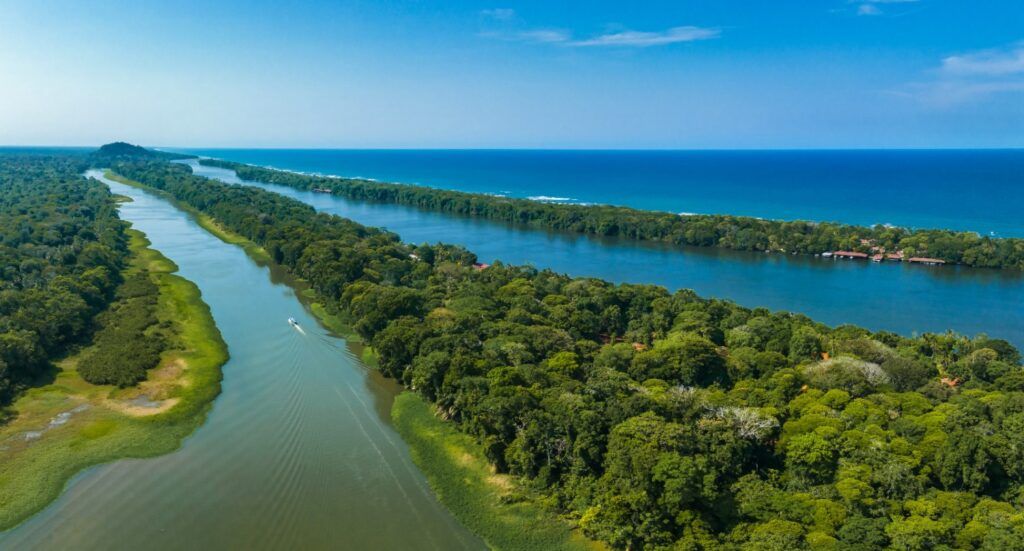
Tortuguero feels like another world. Accessible mainly by boat or small plane, this network of canals, rivers, and dense jungle is often called the “Amazon of Central America.” The beaches here are wild and unsuitable for swimming, but that’s not the point.
From July to October, Tortuguero becomes one of the world’s most important sea turtle nesting sites, especially for green turtles. Visiting during this period is about observation and respect, witnessing ancient natural cycles rather than spending long days on the sand.
Beaches for Wildlife and National Parks
One of the country’s greatest strengths is how seamlessly beaches and wildlife overlap. Large sections of coastline fall within protected areas, offering not just swimming spots but genuine encounters with nature.
Manuel Antonio National Park: Wildlife Meets White Sand
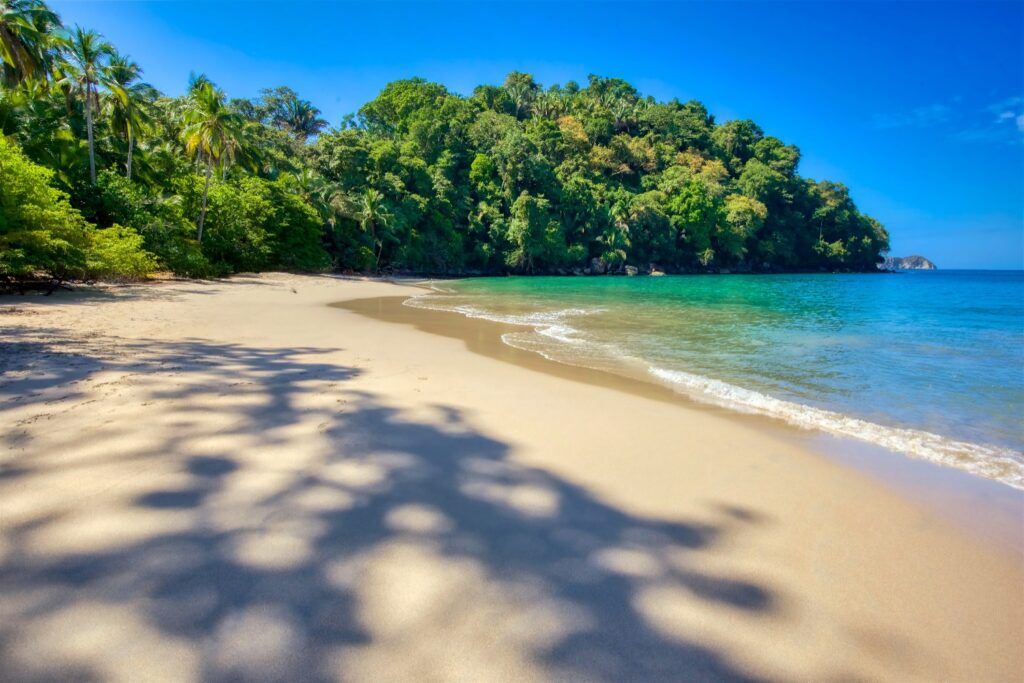
Small in size but rich in biodiversity, Manuel Antonio combines lush forest with some of the most beautiful white-sand beaches in Costa Rica. Calm waters make swimming easy, while monkeys and sloths often appear right along the trails.
Pro tip: book tickets online in advance and arrive early. Entry is limited, the park closes one day a week, and mornings are best for wildlife sightings.
Corcovado National Park: Raw, Remote, and Wild
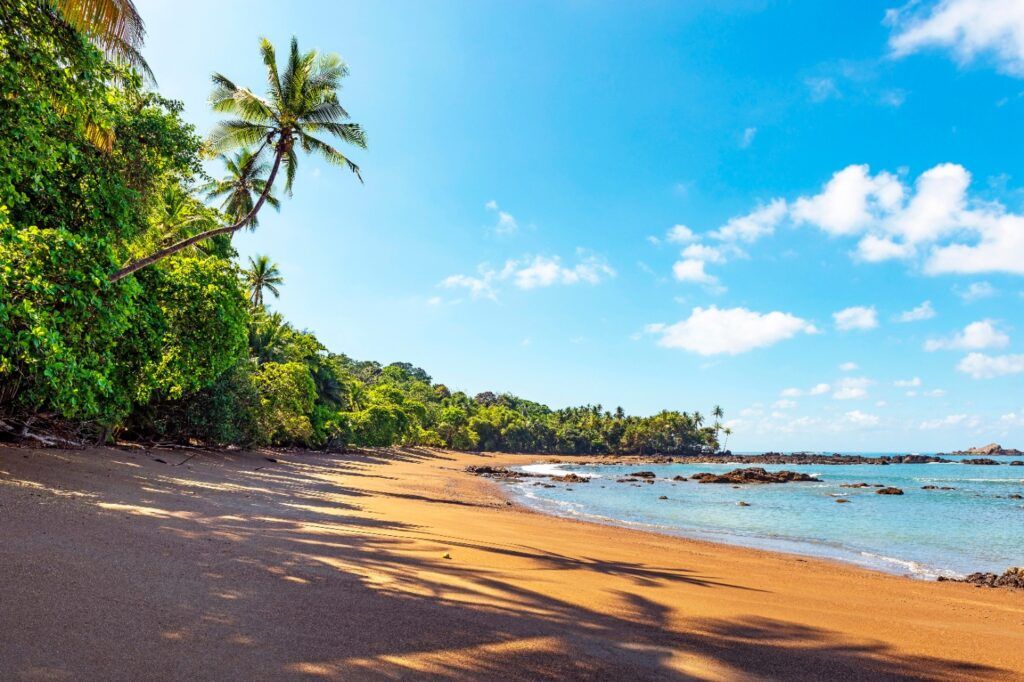
On the Osa Peninsula, Corcovado protects one of the most biologically diverse regions on Earth. Its coastline is rugged, untamed, and unforgettable. Exploring it requires a guide and effort, but rewards include sightings of tapirs, scarlet macaws, and vast stretches of untouched nature.
This is not a place for easy beach lounging — it’s for travellers who want to experience Costa Rica as a powerful natural force.
Practical Tips: Timing, Safety, and Getting Around
Planning a beach trip here means understanding seasons, ocean conditions, and distances.
Best Time to Visit
December to April is ideal for the Pacific coast, with dry, sunny weather. Interestingly, September is often one of the driest months on the Caribbean side, making it a smart choice when the Pacific is at its wettest.
Ocean Safety
Rip currents are the main hazard, especially on Pacific beaches. Always swim near lifeguards and respect warning flags. Calmer swimming spots include Playa Samara, Playa Carrillo, Punta Uva, and Playa Conchal.
Distances may look short, but travel can be slow. Reaching remote beaches often involves rough roads or multiple buses. Private shuttles or domestic flights can save significant time when crossing the country.
Pura Vida Awaits: Why Beaches Shine in a Group Experience
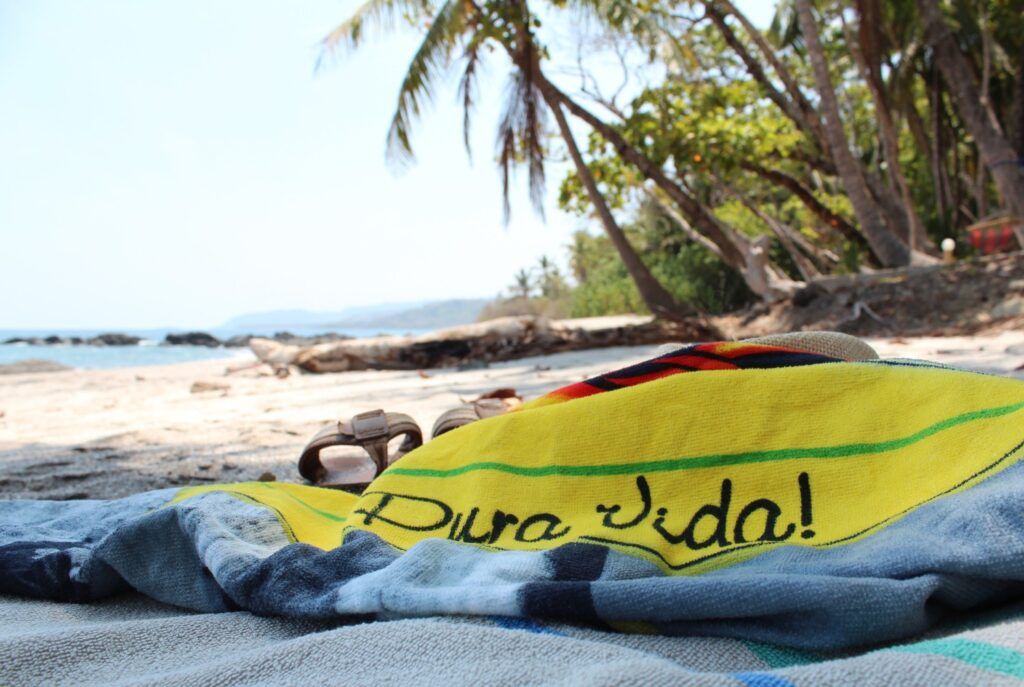
From surf breaks and jungle-backed coves to reggae rhythms and turtle nesting beaches, Costa Rica’s coastlines capture the essence of Pura Vida — where adventure and ease exist side by side.